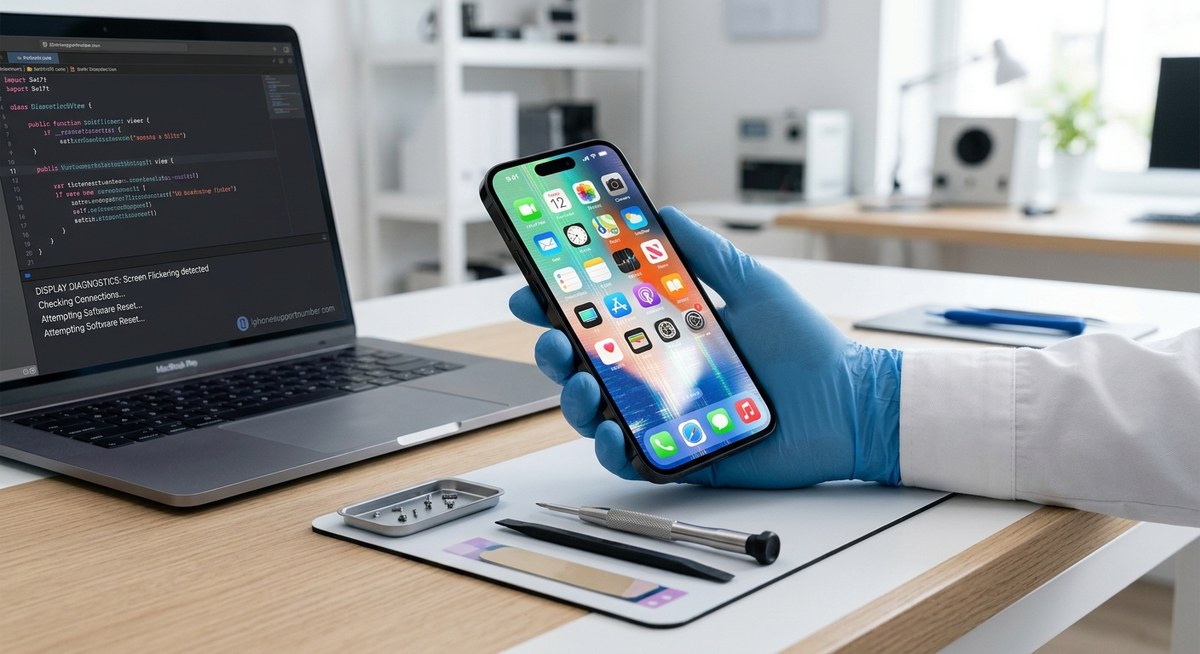
That split second of flashing is hard to miss. You are reading a message or scrolling through a feed, and suddenly the screen flickers. It may happen once. It may happen every few minutes. Either way, it is annoying, and it makes you wonder if your iPhone is giving up.
The good news is that a flickering screen does not always mean you need a costly repair. In many cases, a simple software adjustment can stop the problem. In other cases, the fix is something you can handle at home with a few common tools. This guide will walk you through every option so you can fix iPhone screen flickering without guessing.
iPhone screen flickering usually comes from one of two sources: a software glitch or a hardware issue. Start with free software fixes like a forced restart or display calibration. If the flicker stops in Safe Mode, a third party app is the culprit. If the flicker persists after all software resets, the hardware likely needs service. Always back up your data before trying any repair.
What Makes an iPhone Screen Start Flickering
Screen flickering is not a single problem. It is a symptom. The causes range from a stuck app to a damaged display connector. When you understand the root cause, you can pick the right fix without wasting time.
Here are the most common reasons an iPhone screen flickers:
- A misbehaving app. Some apps are not optimized for your version of iOS. They can cause the display to refresh incorrectly, leading to flicker.
- A stuck software process. Background tasks, a failed update, or low memory can make the screen act up.
- Display calibration drift. Over time, the screen can lose its calibration, especially on older devices.
- Loose or damaged internal cable. If you dropped your phone recently, the display connector may have come partially loose.
- Water or moisture damage. Even a small amount of moisture inside the phone can cause erratic behavior.
- A failing display panel. After years of use, the screen itself can degrade.
The fix you choose depends on which of these is at play. The next section walks you through the easiest fixes first.
Software Fixes: Start With These Before Touching Anything
Software issues are the most common cause of screen flickering on iPhones running iOS 19 or iOS 20 in 2026. These fixes take under five minutes and cost nothing.
1. Force Restart Your iPhone
A force restart clears temporary glitches without erasing any data. Do not confuse this with a regular restart. A force restart cuts power to the display controller and forces it to reinitialize.
Follow these steps based on your model:
- iPhone 8 and later (including iPhone 16, 17, and SE): Press and release the Volume Up button. Press and release the Volume Down button. Press and hold the Side button until the Apple logo appears.
- iPhone 7 and 7 Plus: Press and hold the Volume Down button and the Sleep/Wake button at the same time. Release when the Apple logo appears.
- iPhone 6s and earlier: Press and hold the Home button and the Sleep/Wake button until the Apple logo shows.
After the phone restarts, check if the flicker is gone. Many people stop here because the fix works.
2. Update iOS to the Latest Version
Apple releases iOS updates regularly to fix bugs. A flickering screen could be the result of a known software bug that Apple already patched. Go to Settings > General > Software Update. If an update is available, install it. If you have trouble updating, read our guide on how to fix an iPhone stuck on the Apple logo in 2026.
3. Check for Problematic Apps
Some apps do not play well with the display. If the flicker only happens inside one app, delete that app and reinstall it. If the flicker happens everywhere, boot your iPhone into Safe Mode.
To enter Safe Mode on an iPhone:
- Press and hold the Side button until the power off slider appears.
- Release the Side button, then press and hold the Volume Down button.
- Keep holding the Volume Down button until the home screen loads.
In Safe Mode, third party apps are disabled. If the flicker stops, one of your apps is the problem. Delete suspicious apps one at a time until the flicker goes away.
4. Reset All Settings
This fix keeps your photos, messages, and apps but resets system preferences like Wi Fi passwords, wallpaper, and display settings. A corrupted settings file can cause screen flickering.
Go to Settings > General > Transfer or Reset iPhone > Reset > Reset All Settings. Enter your passcode and confirm. The phone will restart. If you worry about losing your Wi Fi passwords, make a note of them first. Our tutorial on how to reset iPhone settings without data loss can help you prepare.
5. Disable Auto Brightness and True Tone
Auto Brightness and True Tone adjust the screen based on ambient light. Sometimes the sensor data gets confused, causing the screen to flicker as it tries to adjust.
Go to Settings > Accessibility > Display & Text Size. Scroll down and turn off Auto Brightness. Then go to Settings > Display & Brightness and turn off True Tone. If the flicker stops, leave these features off or calibrate them by holding the phone in a well lit room for a few minutes.
Hardware Causes: When the Problem Is Physical
If software fixes did not stop the flicker, the issue is likely hardware related. You can still fix some of these at home, but you need to be careful.
Check for Loose Connections
If you dropped your iPhone recently, the display cable may have wiggled loose. This is especially common on iPhone models where the display is held in place with screws rather than adhesive.
If you are comfortable opening electronics, you can reseat the display connector. For most people, this means taking the phone to a repair shop. A technician can open the phone, disconnect the battery, and reseat the display cable in about 15 minutes. This fix usually costs between $30 and $60 depending on your location.
Look for Signs of Water Damage
Water damage does not always look dramatic. A small amount of moisture can short circuit the display controller and cause flickering. Check the Liquid Contact Indicator (LCI) inside the SIM card tray. If it is red or pink, moisture has been inside your phone.
If you suspect moisture, turn off the phone immediately. Remove the case and place the iPhone in a dry area with airflow. Do not use rice. Rice does not absorb moisture fast enough and can leave dust inside the ports. Instead, use silica gel packets or let the phone air dry for 48 hours. After that, try the force restart again.
When the Display Panel Is Failing
OLED screens on newer iPhones can wear out over time. If your iPhone is three years old or older, the pixels may be degrading. This usually shows as flickering at low brightness levels first.
To test this, turn your brightness to 100%. If the flicker stops or becomes less noticeable, the display panel is likely failing. You can prolong the life by keeping brightness above 50%, but eventually the screen will need replacement.
Comparison Table: Software vs Hardware Flicker
| Behavior | Likely Cause | Best Fix |
|---|---|---|
| Flicker only in one app | Buggy app | Delete and reinstall the app |
| Flicker starts after an iOS update | Software glitch | Force restart or update to latest iOS |
| Flicker gets worse when brightness is low | Failing OLED panel | Display replacement needed |
| Flicker after dropping the phone | Loose display cable | Reseat connector or visit a repair shop |
| Flicker stops in Safe Mode | Third party app issue | Delete suspicious apps one by one |
| Flicker with flickering backlight | Backlight driver failure | Needs professional repair |
| Flicker that pulses randomly | Moisture or electrical short | Turn off, dry, and inspect LCI |
Professional Repair: What to Expect in 2026
If you have tried every software fix and the flicker is still there, it is time to consider professional help. The cost of screen repair in 2026 varies depending on your iPhone model and where you live.
- iPhone SE (third generation): $129 to $179 for a screen replacement at Apple.
- iPhone 15 or 16 Pro Max: $329 to $399 for an official Apple display.
- Third party repair shops: $80 to $200 depending on part quality.
In 2026, Apple has expanded its Independent Repair Provider program. Many local shops now use genuine Apple parts. If you choose a third party shop, ask whether they use genuine displays. Aftermarket screens can cause touch issues and uneven color.
Before you hand over your phone, back up your data. If the repair goes wrong, you want your photos and contacts safe. Our guide on how to manage storage space on your iPhone in 2026 can help you clear space for a backup.
Expert tip: If your iPhone is less than a year old or covered by AppleCare+, start with Apple Support. A screen flicker on a new device is often covered under warranty. Do not open the phone yourself if it is still under coverage. Apple can deny your warranty claim if they find signs of tampering.
Common Mistakes That Make Flickering Worse
Some well meaning fixes can actually damage the display further. Avoid these actions:
- Using a hair dryer to dry the phone. Heat can warp the display and loosen adhesive.
- Tapping or pressing hard on the screen. This can crack the OLED layer.
- Running a third party screen test app. These apps can push the display beyond its safe limits.
- Ignoring the issue for months. A loose cable can eventually short out the motherboard, turning a $150 repair into a $500 one.
- Installing beta iOS software. Beta versions contain bugs that can cause screen flickering. If you are on a beta, remove it by restoring from a stable backup.
If you have been living with a flickering screen for a while, do not wait. The sooner you diagnose it, the cheaper the fix will be.
When a Flickering Screen Signals a Bigger Problem
Most flickering screens are just an annoyance. But in some cases, the flicker is a warning sign of a larger issue.
- Battery swelling. A swollen battery can press against the display from the inside, causing flickering and bulging. If your screen is lifting away from the frame, stop using the phone immediately. A swollen battery is a fire risk.
- Logic board failure. If the flicker is accompanied by random reboots, the logic board may be failing. This requires advanced repair.
- Backlight failure. A flickering backlight that eventually goes dark means the backlight driver is dead. You will need a full screen replacement.
If you notice any of these signs, do not try DIY fixes. Turn off the phone and take it to a professional.
Putting It All Together: Your Action Plan for a Flicker Free Screen
You now have a complete set of steps to fix iPhone screen flickering in 2026. The goal is to start with the cheapest, safest options and move toward professional repair only if needed.
Here is a summary of the numbered process to follow:
- Force restart your iPhone.
- Update to the latest version of iOS.
- Test in Safe Mode to find misbehaving apps.
- Reset all settings if the flicker continues.
- Disable Auto Brightness and True Tone as a test.
- Check for physical damage or moisture.
- Back up your data and seek professional repair.
Each step rules out one possible cause. By the time you reach step seven, you will know exactly what is wrong with your device.
If you have other performance issues alongside the flicker, you may find answers in our guide on top tips to improve iPhone performance and speed up your device. A slow iPhone can sometimes trigger display glitches too.
Your Screen Can Be Fixed
A flickering screen is frustrating, but it is rarely the end of the road for your iPhone. Most flickering problems can be solved in under ten minutes with the right steps. You have the information now. Start with the force restart, work through the list, and you will likely end up with a stable, clear display again.
If the fix turns out to be hardware related, that is okay too. A screen replacement in 2026 is more affordable than buying a new phone, especially if you use a reputable third party shop. Take it one step at a time, and your iPhone will be back to normal before you know it.