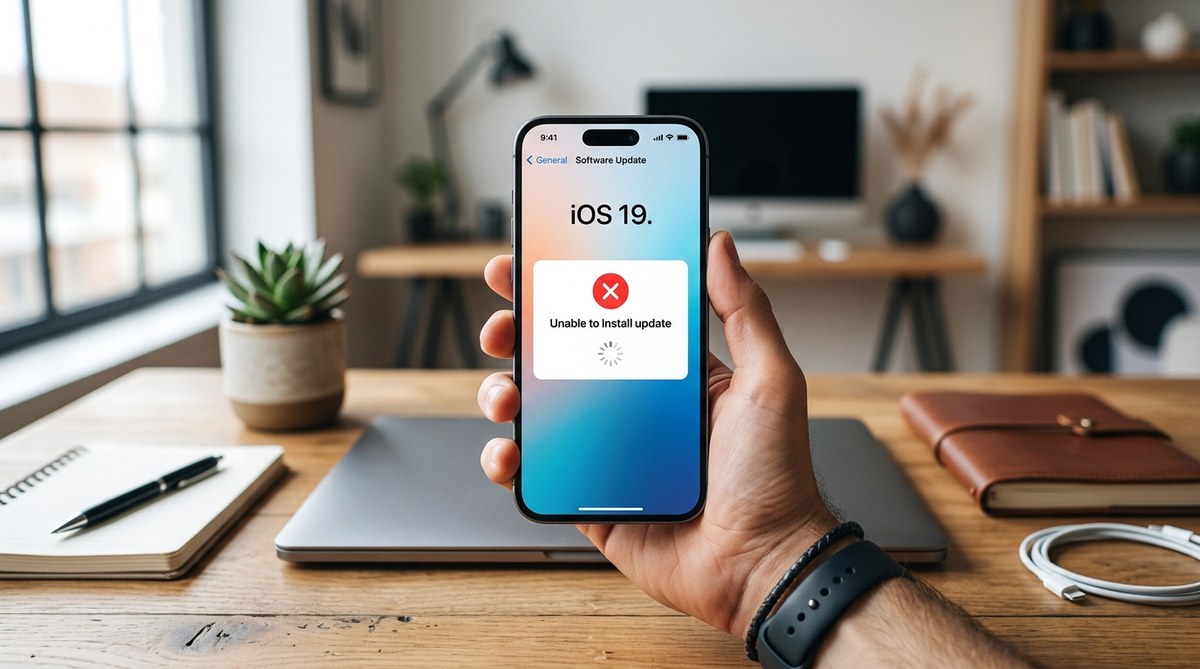
You tap “Download and Install” and nothing happens. Or the progress bar freezes. Maybe you see “Unable to Check for Update” or “Software Update Failed.” When you can’t update iOS, it feels like your iPhone is stuck in the past. I’ve been there. It’s frustrating, especially when you’re excited about new features or security fixes. But here’s the truth: most update problems have a simple cause and an even simpler fix.
The most common reasons your iPhone won’t update to iOS 19 are low storage, weak Wi-Fi, a drained battery, or a temporary glitch in Apple’s servers. You can fix most issues by freeing up space, restarting your device, or updating through a computer. Always back up your data first and be patient — a forced restart often clears stubborn errors. No need to panic; follow the steps below.
Why Your iPhone Won’t Update to iOS 19
Update failures rarely happen without a reason. Here are the usual suspects:
- Not enough storage. iOS 19 needs around 6 to 8 GB of free space to download and install. If your storage is almost full, the update will stall.
- Low battery or no power. Apple requires at least 50% battery to begin an update, and the phone must stay connected to power during installation.
- Weak or unstable Wi-Fi. A dropped connection mid-download can corrupt the update file.
- Apple server issues. Sometimes the problem isn’t you — it’s Apple. Check Apple’s System Status page to see if there’s a known outage.
- Incompatible device. Not all iPhones support iOS 19. The iPhone XR and later are compatible; older models like the iPhone 8 or earlier will not receive the update.
- A pending update or beta profile. If you were enrolled in a beta program, removing that profile might fix the issue.
How to Fix Can’t Update iOS: Step-by-Step Guide
Try these fixes in order. Each one addresses a different cause, and one of them will likely work.
-
Check compatibility. Go to Settings > General > Software Update. If you see a message that your software is up to date but you’re still on an older version, your device might not be supported. Apple’s official compatibility list confirms that only iPhone XS and newer (including SE 2nd gen and later) can run iOS 19.
-
Charge your iPhone. Plug it into a wall charger and let it reach at least 50% battery. Leave it connected during the entire update process.
-
Restart your iPhone. A simple restart clears temporary glitches. On an iPhone with Face ID: press and hold either volume button and the side button until you see the power off slider. Slide to turn off, then hold the side button to turn it back on.
-
Free up storage space. Go to Settings > General > iPhone Storage. Look for large apps or media you don’t need. Delete old messages, offload unused apps, or move photos to iCloud or a computer. Aim for at least 8 GB free. For a deeper cleanup, read our guide on how to manage storage space on your iPhone in 2026.
-
Forget and rejoin your Wi-Fi network. Go to Settings > Wi-Fi, tap the “i” icon next to your network, and choose Forget This Network. Then reconnect by entering your password. If that doesn’t help, try restarting your router.
-
Turn off VPN and any content blockers. VPNs and ad blockers can interfere with Apple’s update servers. Disable them in Settings > General > VPN & Device Management.
-
Delete the downloaded update and try again. If you already downloaded iOS 19 but the installation failed, remove the file. Go to Settings > General > iPhone Storage, find the iOS 19 update under the list of apps, tap it, and select Delete Update. Then go back to Software Update and download it fresh.
-
Update using a computer. This bypasses many wireless issues. Connect your iPhone to a Mac (with Finder) or a PC (with iTunes or the Apple Devices app). Select your iPhone, click Check for Update, and follow the prompts. This method uses your computer’s internet connection and is often more reliable.
-
Force restart your iPhone. This is different from a normal restart and can clear deeper software hiccups. On iPhone 8 or later: press and release the Volume Up button, then Volume Down button, then immediately press and hold the Side button until you see the Apple logo.
-
Reset network settings. Go to Settings > General > Transfer or Reset iPhone > Reset > Reset Network Settings. This clears saved Wi-Fi passwords and VPN settings, so you’ll need to rejoin networks afterward. It can fix stubborn update errors related to connectivity.
What to Do If Your iPhone Still Won’t Update
Sometimes the update seems to fail for no obvious reason. The table below separates helpful actions from common mistakes.
| Do This | Avoid This |
|---|---|
| Back up your iPhone to iCloud or a computer before any major update. | Skipping backup because you’re in a hurry. A failed update can rarely cause data loss. |
| Check Apple’s System Status at apple.com/support/systemstatus. | Assuming the problem is always on your end. Server outages happen. |
| Use a wired connection (via computer) if Wi-Fi keeps failing. | Trying the same wireless method over and over and expecting different results. |
| Wait at least 30 minutes after a failed attempt before retrying. | Repeatedly tapping “Download and Install” every minute. This can stress the process. |
Expert advice from an Apple technician I spoke with: “If you’ve tried everything and still can’t update, use a computer. That solves about 90% of the cases we see. And if the update still fails after that, contact Apple Support directly. There might be a hardware issue or a custom configuration blocking the install.”
Preventing Update Problems in the Future
You don’t want to repeat this headache every time a new iOS version arrives. Here’s how to stay ahead:
- Keep at least 10 GB of free space at all times. This gives the update room to download and expand.
- Stay on a stable Wi-Fi network. If your home network is slow, consider updating at a friend’s house or using a public hotspot that’s reliable.
- Update early in the morning. Apple’s servers are less busy and more responsive during late night and early morning hours in the US.
- Turn off automatic updates if you prefer manual control. You can turn it back on after you’ve updated successfully.
- After updating, check for any lingering issues. If you notice battery drain or app crashes, we have guides for those too: check out how to fix common iPhone battery drain issues and our troubleshooting guide for iPhone Wi-Fi connectivity problems.
Stay Up to Date Without the Stress
The “can’t update iOS” error is usually a speed bump, not a dead end. By working through the list above, you’ll almost always get your iPhone running the latest version of iOS. And if you get stuck, remember that a computer-based update is your fallback. You don’t need to be a tech wizard to make it work. Take a deep breath, plug in your phone, and follow the steps one at a time. In a few minutes, you’ll be exploring the new features of iOS 19.