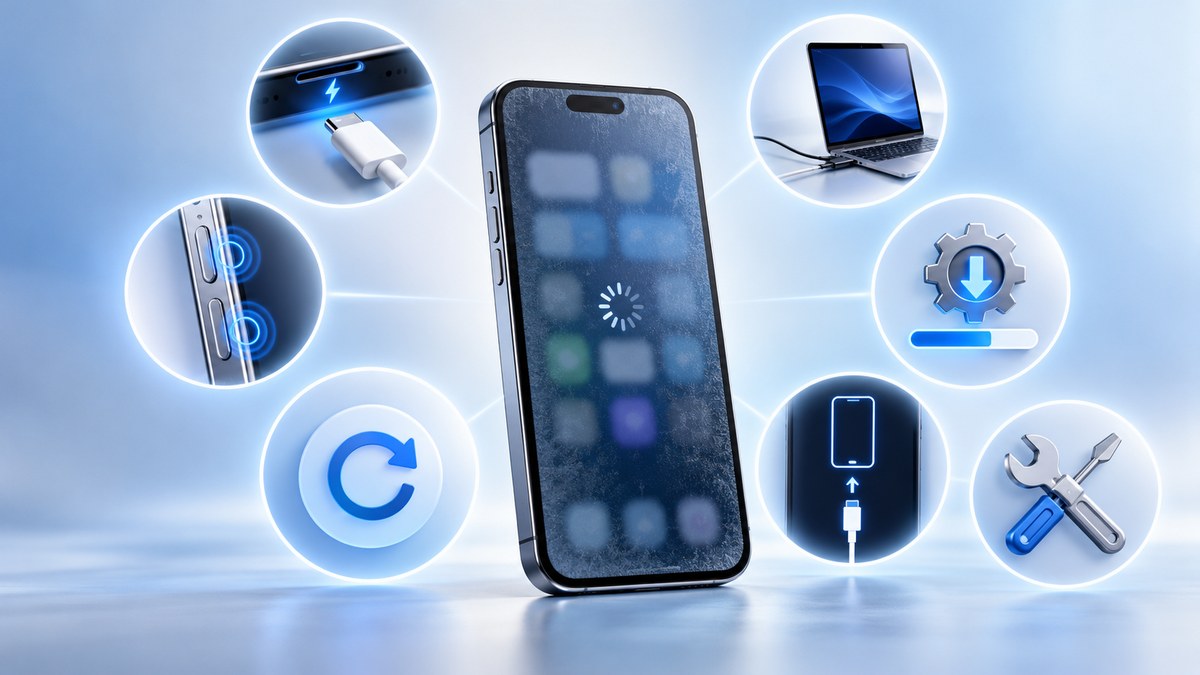
You just restarted your iPhone, and instead of a smooth unlock, you got a blank stare from the screen. You swipe. You tap. Nothing happens. The display is on, but the touchscreen is completely unresponsive. It feels like your phone is frozen in time, and you have no idea how to unfreeze it.
Take a breath. You do not need to rush to a repair shop or start shopping for a new phone. In most cases, a frozen iPhone that won’t respond to touch can be fixed at home in a few minutes. This guide walks you through seven practical steps to get your touchscreen working again.
A frozen iPhone with an unresponsive touchscreen is almost always a software glitch, not a hardware failure. Start with a force restart using the physical buttons. If that fails, try entering Safe Mode, updating iOS, or checking for a stuck app. These seven methods solve over 95% of touch issues without needing a professional repair.
Why Your iPhone Touchscreen Stops Working
Before we jump into fixes, it helps to understand why this happens. An iPhone frozen after a restart usually points to one of these culprits:
- A background app crashed during startup and locked the system.
- The operating system (iOS) encountered a temporary bug.
- The touch digitizer lost its calibration after the reboot.
- Low storage or corrupted cache files are interfering with the interface.
The good news is that none of these require a trip to the Apple Store. Let’s start with the most effective fix.
1. Perform a Force Restart Using Physical Buttons
When the touchscreen is dead, your only way to communicate with the phone is through its hardware buttons. A force restart is the digital equivalent of unplugging a desktop computer and plugging it back in.
Here is how to do it:
- Press and hold the Power button and the Volume Down button at the same time.
- Keep holding both buttons for about 10 to 15 seconds.
- The screen will go black, and the Apple logo will appear.
- Release the buttons as soon as you see the logo.
If your iPhone model does not have a dedicated Power button (like the iPhone 15 and later), use the Side button and Volume Down combination instead.
Once the phone boots up, test the touchscreen immediately. If it works, great. If not, move to the next step.
Expert tip: A force restart clears the device’s volatile memory without erasing your data. It is safe to use and should always be your first move when the touchscreen is unresponsive.
2. Enter Safe Mode to Disable Problematic Apps
Sometimes a third-party app gets stuck during the boot process and freezes the entire interface. Safe Mode loads only the essential system software, bypassing all user-installed apps.
To enter Safe Mode on an iPhone:
- Press and hold the Volume Down button while the phone is off.
- Keep holding it and press the Power button (or Side button) once.
- Continue holding Volume Down until the lock screen appears.
- You will see “Safe Mode” written in the bottom left corner.
In Safe Mode, your touchscreen should work because no third-party software is running. Use this opportunity to delete any apps you installed recently. Once you uninstall the culprit, restart the phone normally.
If the touchscreen still does not respond in Safe Mode, the problem is deeper. Move to the next fix.
3. Clean the Screen and Check for Physical Blockers
This sounds too simple, but it works more often than you think. A layer of dirt, oil, or a screen protector that is peeling at the edges can confuse the capacitive touch layer.
What to do:
- Turn off the phone if possible.
- Wipe the screen with a soft, lint-free microfiber cloth.
- If you use a screen protector, remove it completely.
- Check for any cracks or chips in the glass. A cracked screen can cause dead zones.
After cleaning, restart the phone and test the touch response. If the screen is physically damaged, you will need a screen replacement. But in many cases, a clean glass surface is all it takes.
4. Update or Reinstall iOS via Recovery Mode
A corrupted system file can cause the touch digitizer to stop communicating with the processor. Recovery Mode lets you reinstall iOS without losing your personal data.
Follow these steps:
- Connect your iPhone to a computer using a USB cable.
- Open Finder (Mac) or the Apple Devices app (Windows).
- Press and hold the Volume Up and Volume Down buttons together for a few seconds.
- While holding them, press and release the Power button.
- Keep holding the volume buttons until the recovery screen appears on your computer.
- Click Update to reinstall the latest iOS version without erasing your data.
This process downloads the operating system fresh and replaces any corrupted files. After the update, your touchscreen should come back to life.
If you want to learn more about keeping your system smooth, check out our guide on top tips to improve iPhone performance and speed up your device.
5. Calibrate the Touchscreen Using the Built-In Diagnostic Tool
Apple includes a hidden diagnostic tool that can recalibrate the touch digitizer. This is useful if the screen is partially responsive or if taps register in the wrong place.
How to access the diagnostic tool:
- Open the Phone app (the green icon with a phone receiver).
- Dial
*#0#to enter the service menu. - Select Touch from the list.
- Follow the on-screen instructions to draw lines across the entire screen.
If the touchscreen is completely frozen, you may not be able to enter this menu. In that case, skip to the next fix.
6. Check for Overheating or Battery Issues
An iPhone that is too hot or too cold can disable the touchscreen to protect the internal components. This is a safety feature, not a bug.
Signs of a temperature issue:
- The screen feels warm to the touch, even when idle.
- The phone was left in a car on a hot summer day.
- The battery percentage drops unusually fast.
What to do:
- Move the phone to a cool, shaded area.
- Remove any thick case that traps heat.
- Let it sit for 15 to 20 minutes.
- Try the force restart again.
If the battery is swollen or damaged, the phone may shut down the touch layer to prevent electrical shorts. In that case, you will need a battery replacement. For more on battery health, see our article on how to fix common iPhone battery drain issues quickly.
7. Factory Reset as a Last Resort
If none of the above methods work, a factory reset will erase all data and settings, returning the phone to its original state. This should only be used when the touchscreen is completely unresponsive and you have exhausted every other option.
Before you reset, try to back up your data using a computer:
- Connect the iPhone to a computer.
- Open Finder or Apple Devices.
- If the phone is recognized, select Back up to save your photos and contacts.
To perform a factory reset:
- Turn off the phone.
- Press and hold the Volume Up button.
- Press and release the Power button while still holding Volume Up.
- When the recovery screen appears, choose Erase and Reset.
- Confirm the action.
After the reset, the phone will boot up as if it were new. Set it up again and restore your data from the backup.
| Fix Method | Difficulty | Risk of Data Loss | Success Rate |
|---|---|---|---|
| Force restart | Easy | None | 70% |
| Safe Mode | Easy | None | 15% |
| Clean screen | Easy | None | 10% |
| iOS reinstall | Medium | Low | 80% |
| Diagnostic tool | Medium | None | 50% |
| Temperature check | Easy | None | 20% |
| Factory reset | Hard | High | 95% |
Common Mistakes to Avoid
When you are frustrated, it is easy to make things worse. Here are some pitfalls to steer clear of:
- Do not keep pressing the screen harder. The touch layer is capacitive, not pressure sensitive. Pressing harder will not fix it and could damage the glass.
- Do not use sharp objects to pry the screen. This can crack the display or break the digitizer.
- Do not ignore a swollen battery. If the back of the phone is bulging, stop troubleshooting and get professional help.
- Do not install sketchy “touch fix” apps from unknown sources. They often contain malware.
If you are dealing with other issues like apps crashing, read our guide on troubleshooting iOS app crashes step by step.
When to Call for Professional Help
Sometimes a frozen iPhone with an unresponsive touchscreen is a sign of hardware failure. You should consider taking the phone to a repair shop if:
- The screen has visible cracks or black spots.
- The phone gets hot immediately after a restart.
- The force restart and Safe Mode both fail.
- Water or moisture got inside the device.
In those cases, a technician can test the digitizer ribbon cable and replace the screen if needed.
Keeping Your Touchscreen Healthy Going Forward
Once you get your iPhone working again, a little maintenance goes a long way. Here are a few habits to keep your touch responsive:
- Restart your phone once a week to clear temporary files.
- Keep your iOS updated to the latest version.
- Avoid installing too many apps that run in the background.
- Use a quality screen protector that does not interfere with touch.
For more ways to keep your device running smoothly, check out our post on optimizing your iPhone apps for better speed and responsiveness.
Your iPhone Can Bounce Back
A frozen iPhone that won’t respond to touch is annoying, but it is almost never a permanent problem. Start with the force restart. Work your way down the list. In most cases, you will be back to scrolling, typing, and tapping within ten minutes.
Take it step by step. You have the tools and the steps right here. Your phone is not broken. It just needs a little help waking up.